
PV MODULE RECYCLING · SOUTH AFRICA
A decommissioned solar panel is still your responsibility. By law, it can't end up in a landfill.
South Africa has an estimated 25 to 30 million PV modules installed. Every one will eventually be decommissioned and, under the National Environmental Management: Waste Act, none of them may go to landfill. EWaste Africa collects and recycles end-of-life solar panels at our licensed facilities, taking care of your compliance risk.
WHY THIS MATTERS
THE LAW
Solar panel waste is hazardous waste, and landfill was never an option for long
South Africa's waste legislation classifies decommissioned solar panels as hazardous, and has phased out their disposal to landfill entirely. Here is how the legal position came about, and what it means for anyone holding end-of-life PV modules today.
The National Environmental Management: Waste Act, 2008 (NEM:WA) governs how waste, including hazardous waste, may be disposed of in South Africa. Its 2014 amendment added Schedule 3, which lists waste electrical and electronic equipment (WEEE) as hazardous in its own right, and separately classifies silicon and its derivatives as hazardous (clause 5(g)). A decommissioned solar panel meets both definitions: it is e-waste, and most panels installed locally use silicon cells.
The Waste Classification and Management Regulations of 2013 banned hazardous WEEE from landfill, with an eight-year compliance window.
HOW IT WORKS
The journey of a decommissioned solar panel
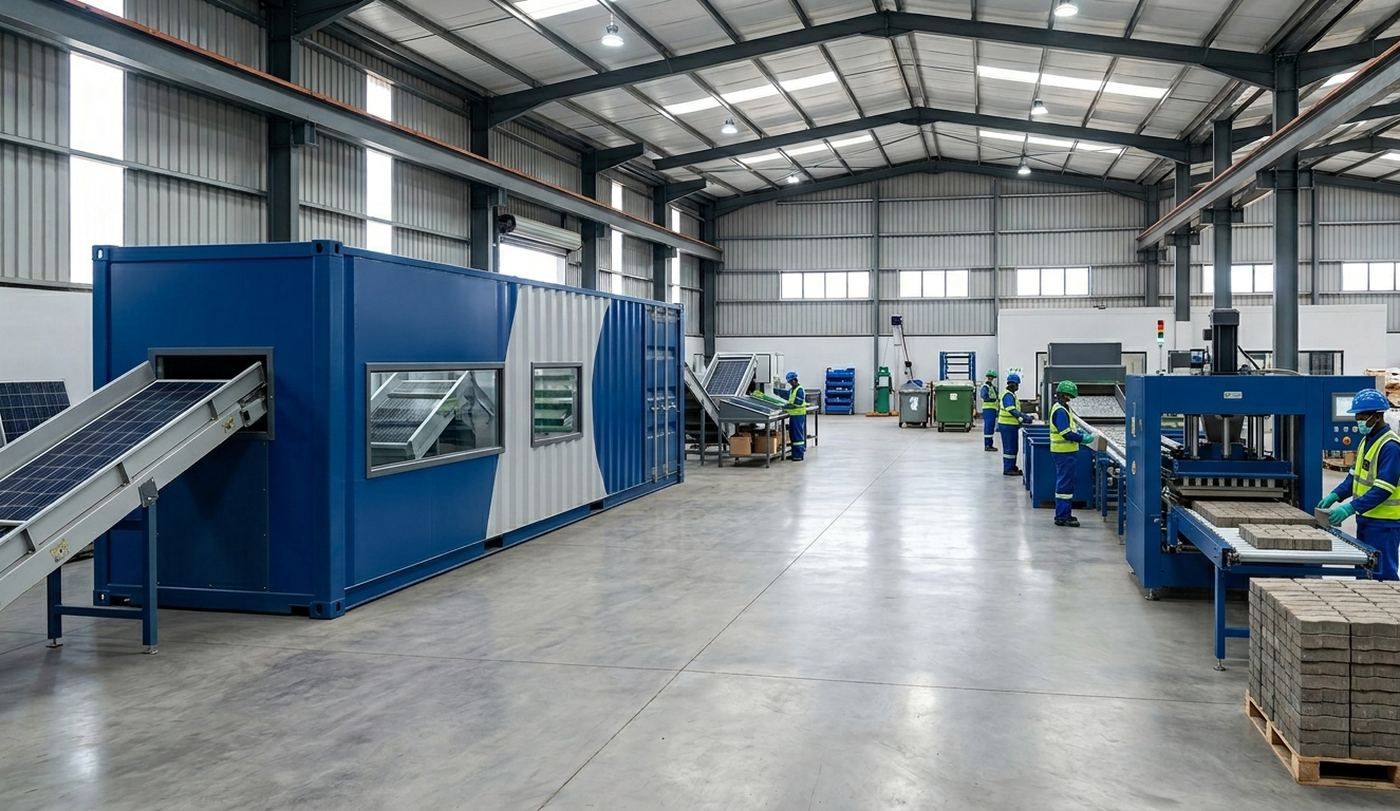
A silicon PV module is mostly an aluminium, steel and glass enclosure protecting a thin layer of photovoltaic wafers glued to a backing sheet, together known as the black mat. That black mat is only around 4% of the panel's total mass, but it carries the silver and copper that make recovery worthwhile. The panel itself is classified as hazardous waste because it is e-waste, not because of any single material inside it. We recover as much value as possible, on both crystalline silicon and thin-film technology.
Collection & logistics
We collect decommissioned modules from wherever you're situated in South Africa, at a scheduled charge, and transport them to one of our licensed facilities under proper waste manifests.

Deframing
Each module passes through a deframing unit, which mechanically separates the aluminium frame and the junction box, with its cabling, from the glass-and-laminate sheet beneath.
Shredding & sieving
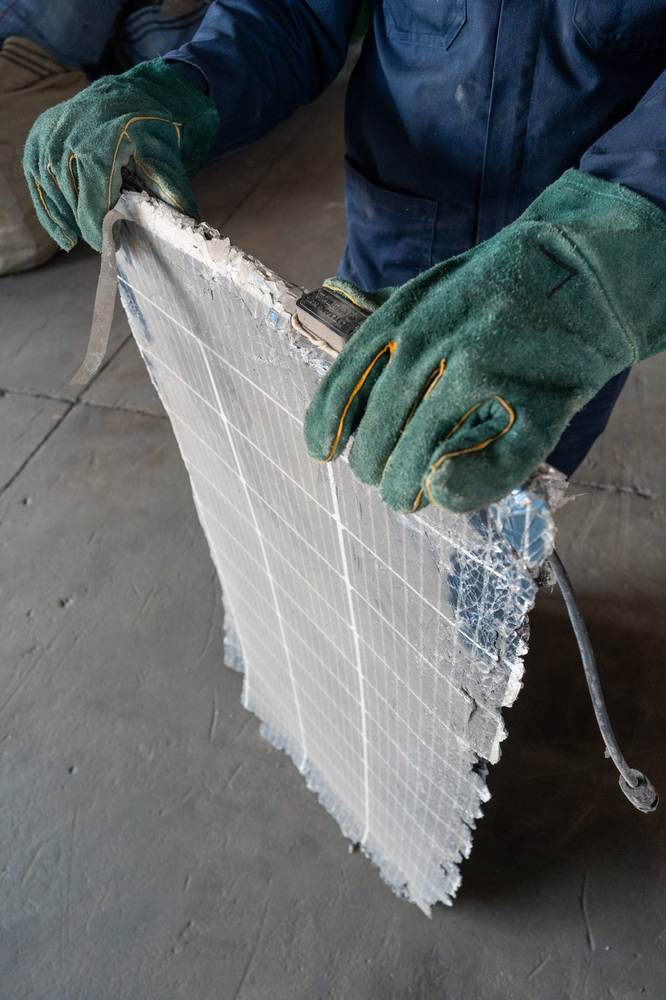
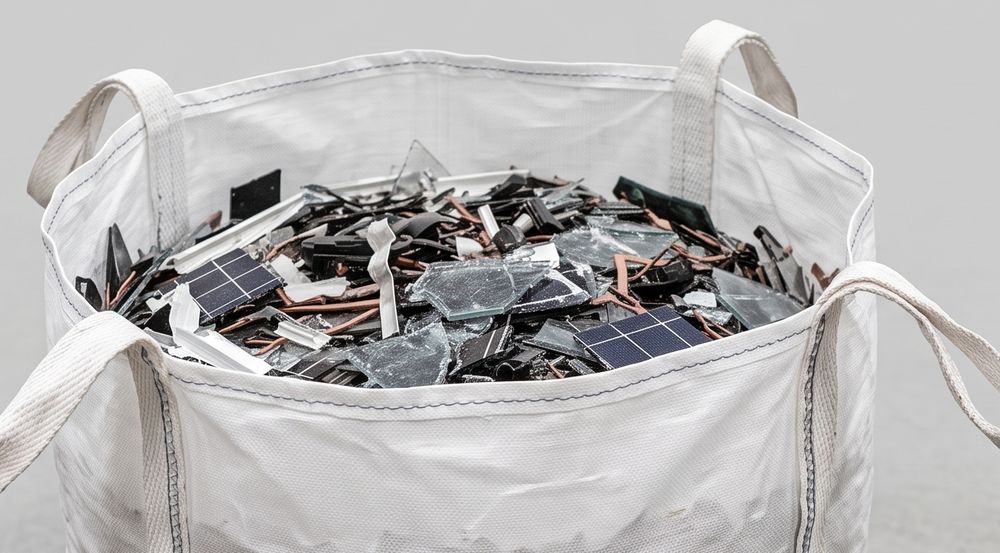
The de-framed laminate, glass fused to the black mat, is shredded and then sieved, splitting the material into two clean fractions: glass, and the concentrated black mat.
Silver & copper recovery
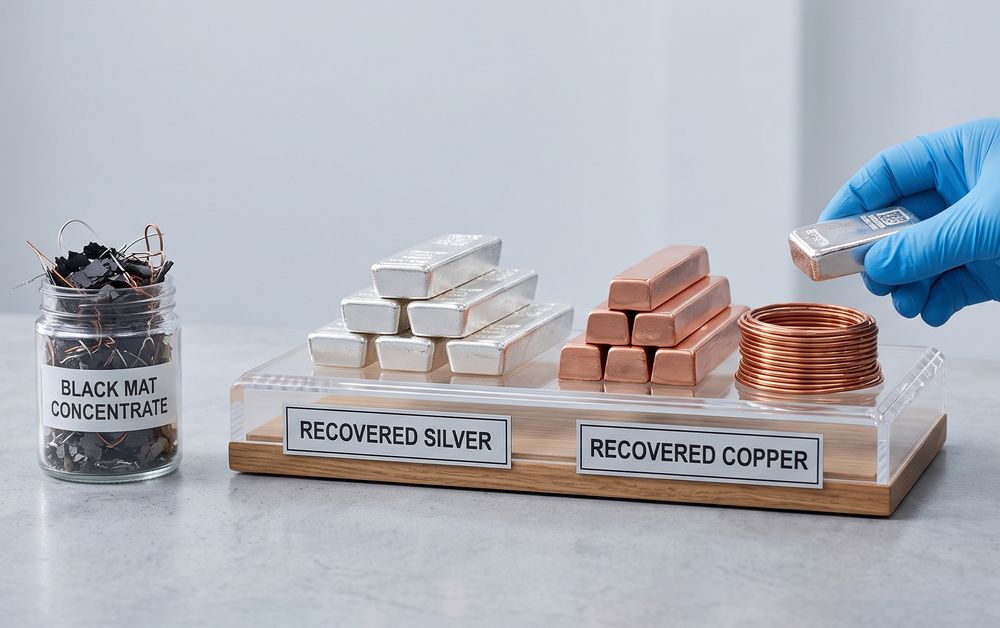
The black mat is refined further to recover silver and copper, the two most valuable materials in a PV module, closing the loop on the metals rather than losing them to landfill.
Beneficiation: Interlocking Eco-Pavers
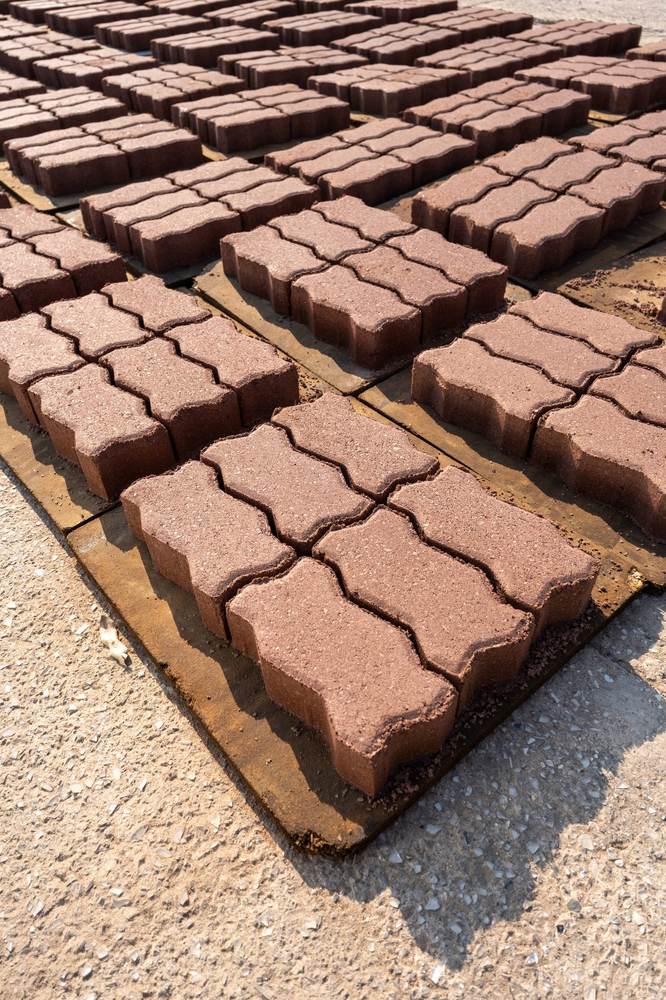
The crushed glass replaces both the sand and the stone in paver production. We bind it with a green binder rather than cement, avoiding the associated CO2 emissions, to produce our Interlocking Eco-Pavers.
FROM WASTE TO WORTH
A circular outcome you can point to
Most of a solar panel's mass leaves our facility as recovered aluminium and steel, sold back into local supply chains; the junction box and cabling are processed at our own facilities. The black mat is refined further to recover silver and copper, and the glass fraction becomes an Interlocking Eco-Paver: a tangible, certified product you can put down at your own site as evidence of how you've closed the loop on your solar investment.
Every consignment processed at our facilities is accompanied by a certificate of safe recycling, giving you a paper trail for NEM:WA compliance, Extended Producer Responsibility reporting and King V governance disclosures.
THE PRODUCT
EWA Interlocking Eco-Pavers
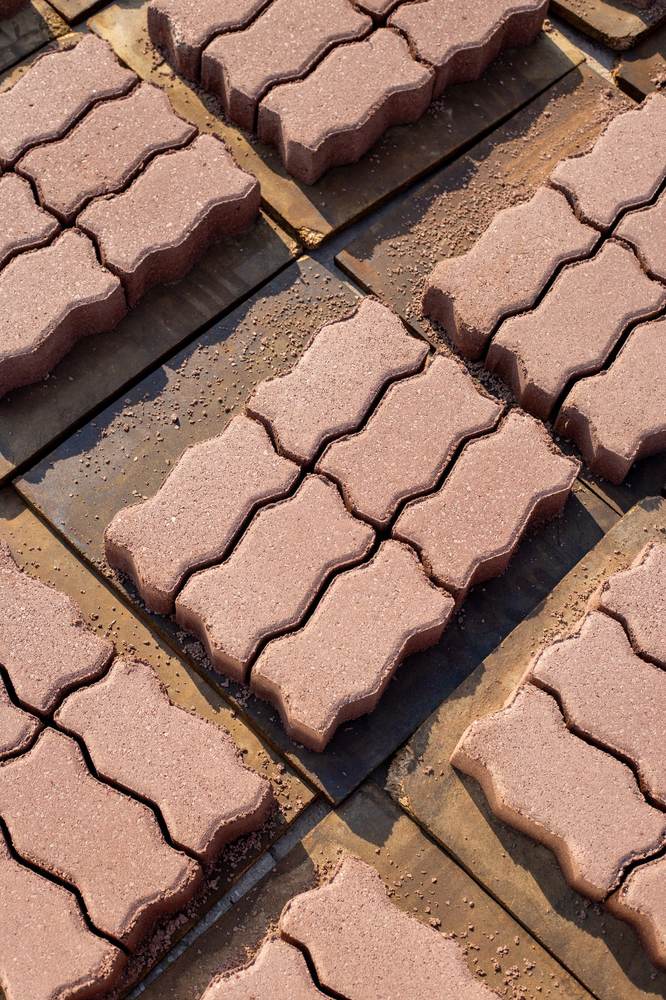
Every panel we recycle ends up in one of two places: recovered metal, or the paver at your feet. Our Interlocking Eco-Pavers are made from recycled glass reclaimed from waste lighting and solar panels, giving you a durable, certified paving product built to look good and do good.
- Perfect for residential, municipal and commercial projects
- Hand-made using a wet cast process for consistent quality and texture
- Standard colours in grey, red, blue, green and black; custom colours on request
COMPLIANCE
Recycling you can put in an audit file
Solar panel waste is hazardous waste. Handling it properly means holding the right licences, the right accreditations, and the right paperwork, not just the right intentions.
Licensed hazardous waste facilities
Purpose-built capacity to receive, store and process hazardous WEEE, including PV modules, under permit.
9001 · 14001 · 45001
Accredited quality, environmental and occupational health & safety management systems across our facilities.
BB-BEE Level 1
A proudly South African business, contributing at the highest BB-BEE recognition level.
Track record
Operator of South Africa's first licensed lighting waste recycling facility, with over 12 million light bulbs processed to date.
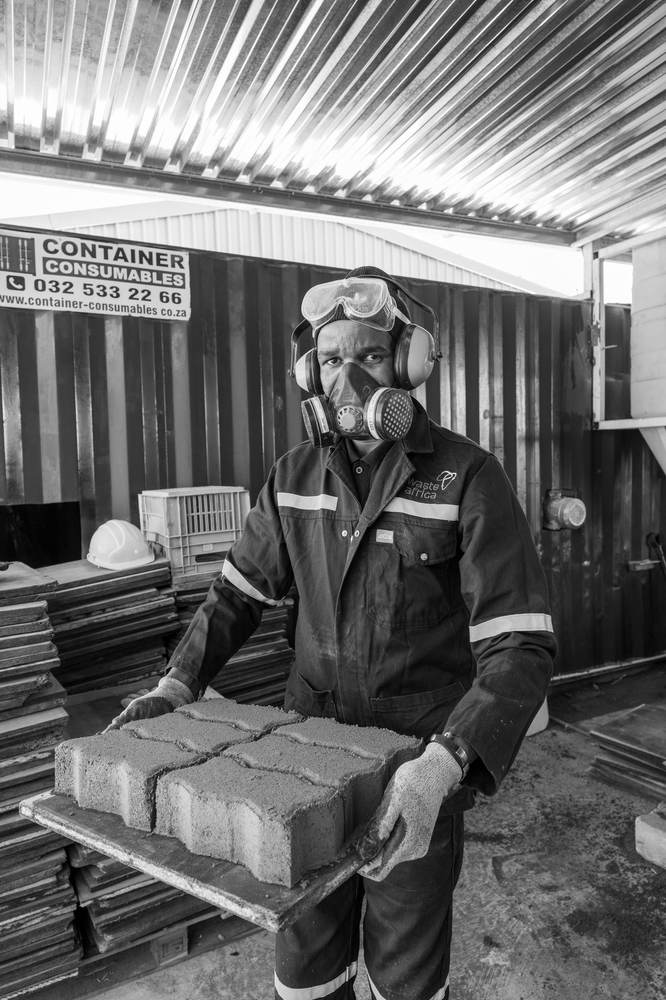
Licensed processing facility
Licensed processing facility
Collection point
COMMON QUESTIONS
Solar panel recycling in South Africa, explained
Is it illegal to send solar panels to landfill in South Africa?
Yes. Under NEM:WA and the National Norms and Standards for Disposal of Waste to Landfill, hazardous waste electrical and electronic equipment, a category that includes silicon-based solar panels, has been banned from landfill disposal since 24 August 2021.
How much solar panel waste will South Africa produce?
South Africa has an estimated 25 to 30 million PV modules currently deployed. Industry estimates put cumulative PV module waste at around 7,000 tonnes by 2030, as early installations reach end of life.
Why are solar panels classified as hazardous waste?
Primarily because it is electrical and electronic equipment (WEEE): Schedule 3 of the NEM:WA Amendment Act lists WEEE as hazardous waste in its own right, so it is the fact that a panel is e-waste, not any single material inside it, that makes it hazardous in law. Most PV modules installed locally also use silicon photovoltaic cells, which brings them within Schedule 3's separate classification of silicon and its derivatives as hazardous (clause 5(g)), a second basis for the same result.
What happens to a solar panel when it's recycled?
We collect the module and transport it to a licensed facility, where it passes through a deframing unit that separates the aluminium frame and junction box from the laminate. The remaining glass and black mat is then shredded and sieved to split the two apart. We recover silver and copper from the black mat, and beneficiate the crushed glass into raw material for our Interlocking Eco-Pavers.
What materials can be recovered from a solar panel?
A typical silicon PV module yields an aluminium frame, steel, a junction box and cabling, glass, and a black mat layer from which we recover silver and copper. The crushed glass fraction is used to replace sand and stone in the manufacture of our Interlocking Eco-Pavers.
What types of solar panels can EWaste Africa recycle?
We process both monofacial and bifacial silicon-based modules, in both crystalline silicon and thin-film formats.
Does EWaste Africa provide a recycling certificate?
Yes. We issue a certificate of safe recycling for every consignment processed at our licensed facilities, supporting your NEM:WA compliance records, EPR reporting and King V governance disclosures.
What are EWA Interlocking Eco-Pavers made from?
They're hand-made using a wet cast process from 40% recycled material, including crushed glass recovered from waste lighting and solar panels. They have a compressive strength of 10.5 MPa, are tested to SANS 1058 and certified to SANS 1215, and hold Global GreenTag LCARate Bronze certification at GBCSA Level B.
Who can use this service, and how do I get a quote?
Installers, EPCs, asset owners, facility managers and residential customers anywhere in South Africa can use our solar panel collection service. Use the "Contact us" button above, or email info@ewasteafrica.net, and our regional team will confirm scheduling and cost.
GET IN TOUCH
Ready to retire a panel the right way?
Tell us where your decommissioned modules are and how many there are. We'll confirm collection, licensed processing and your certificate of safe recycling.